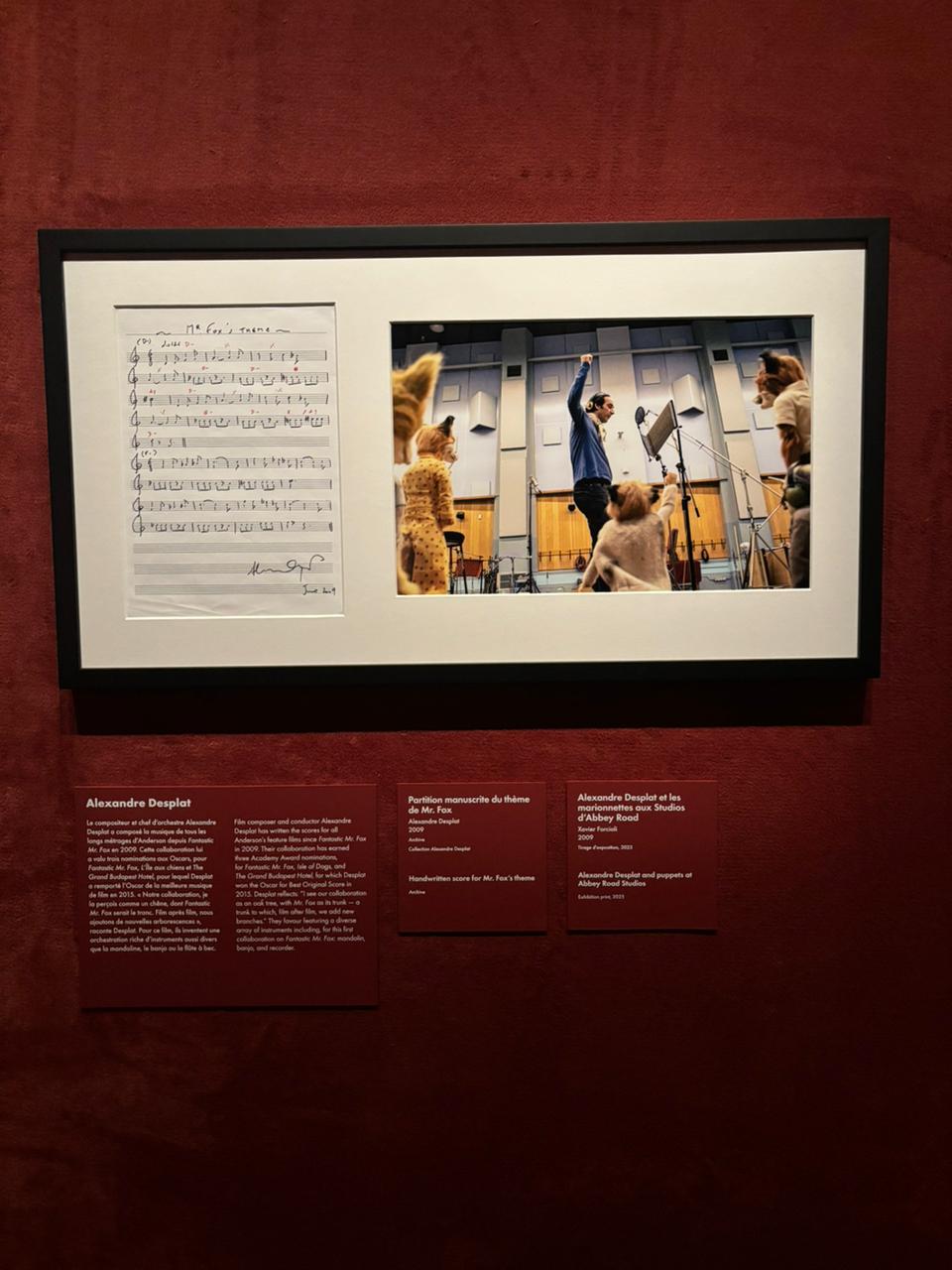
At La Cinémathèque française, cinema unfolded not merely as moving image, but as a meticulously composed universe. Wes Anderson: The Archives invited visitors into the intimate architecture of a filmmaker whose worlds are built with the precision of a watchmaker and the tenderness of a diarist.
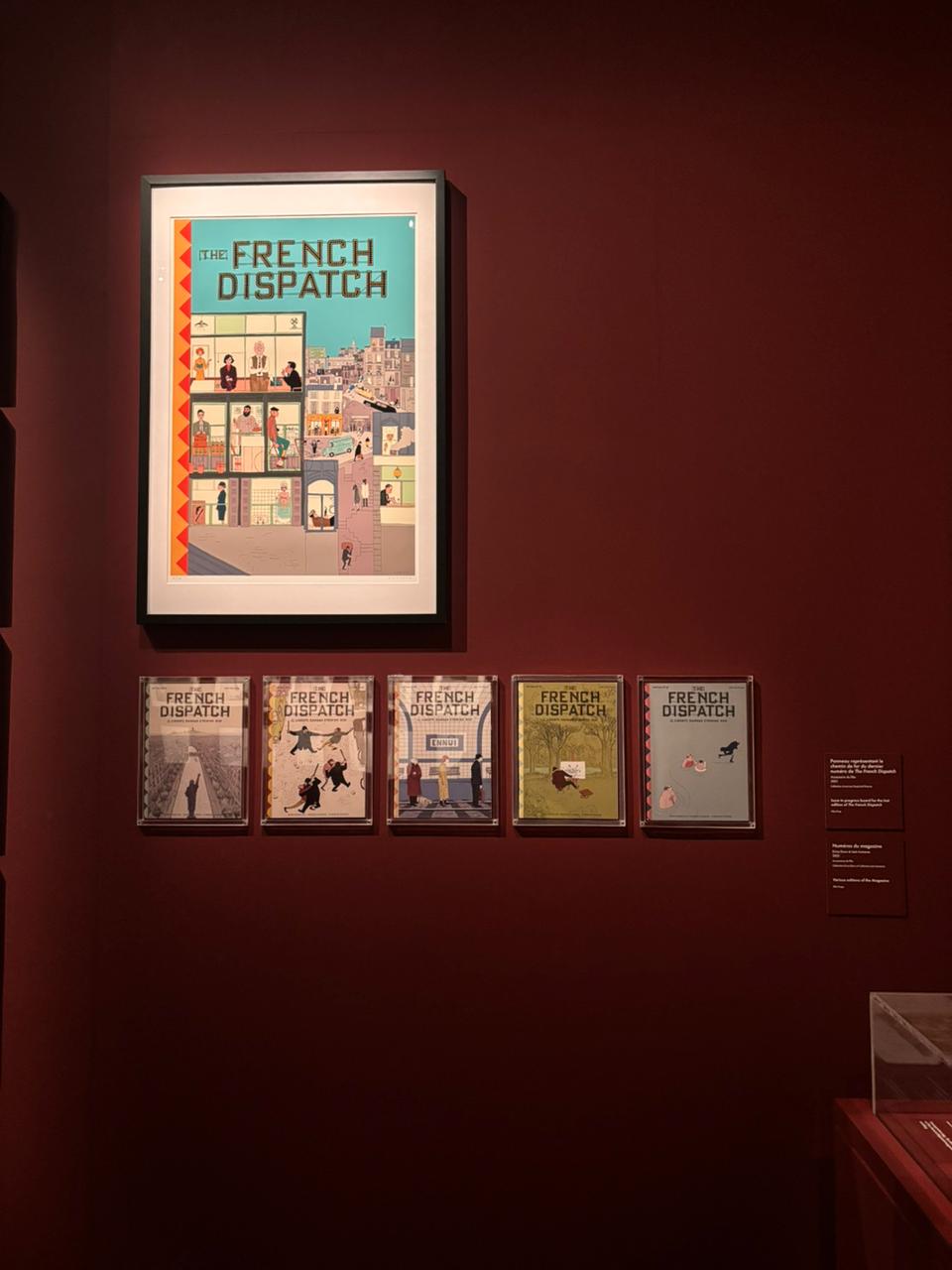
Curated in close collaboration with Anderson himself, the exhibition traced his cinematic journey from Bottle Rocket to Asteroid City, revealing the hand-crafted soul behind the symmetry. Original props, costumes, notebooks, storyboards, miniatures, and models—many drawn directly from the director’s personal archive—were presented as artefacts of imagination: objects that once inhabited fictional worlds, now standing quietly in reverence to process and craft.
Here, the iconic became tactile. The Boy with Apple painting from The Grand Budapest Hotel, the meticulously painted trains of The Darjeeling Limited, and the delicate puppets of Fantastic Mr. Fox and Isle of Dogs spoke not only of visual wit, but of devotion—to detail, to colour, to narrative rhythm. Polaroids, handwritten notes, and preparatory sketches revealed a filmmaker who thinks in images long before cameras roll.
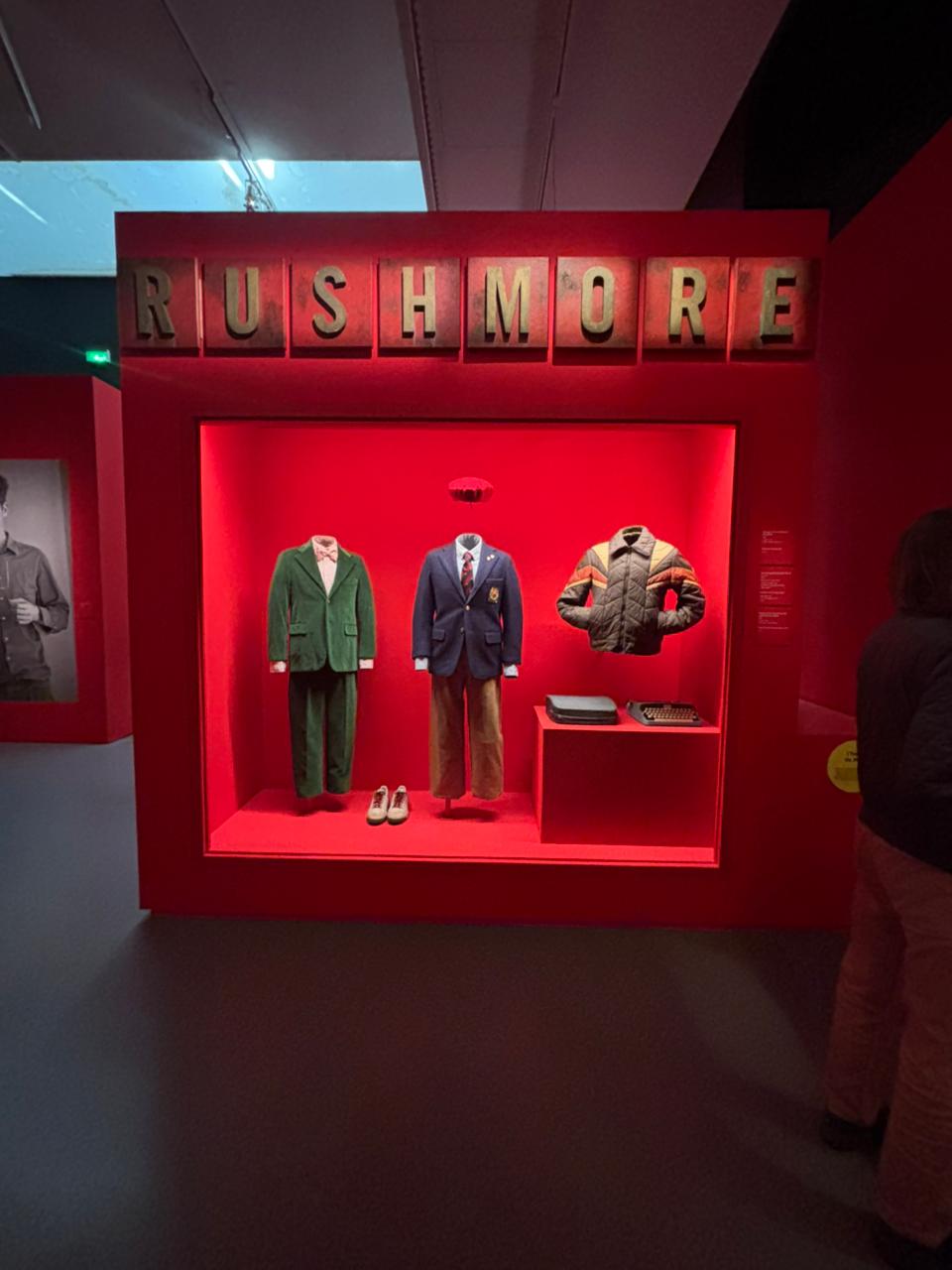
Beyond nostalgia, the exhibition functioned as a meditation on authorship. It illuminated Anderson’s recurring collaborators, his architectural approach to framing, and his enduring fascination with memory, loss, adventure, and belonging. Each room felt like a chapter, each object a sentence—precise, whimsical, and quietly emotional.
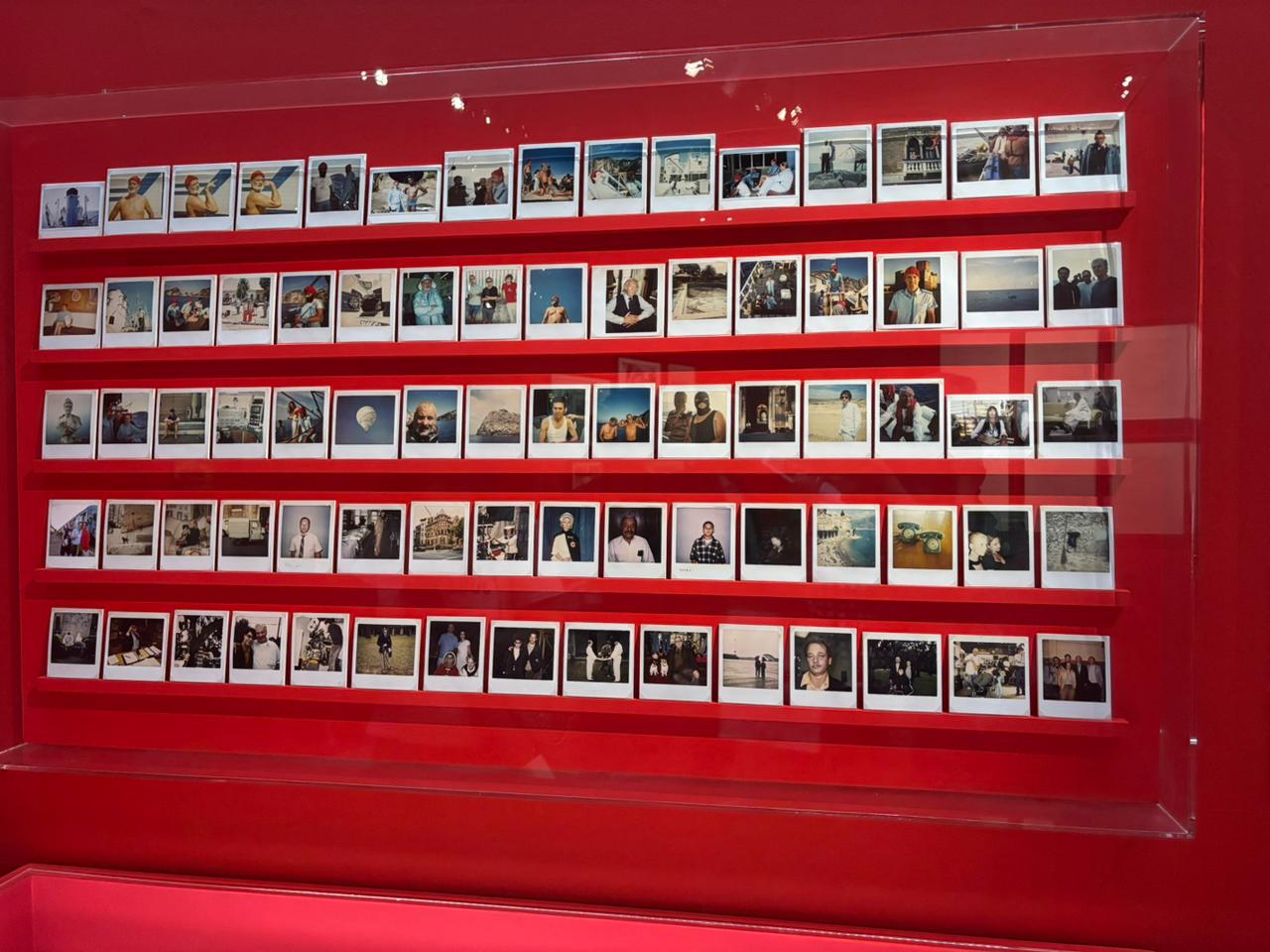
Staged within one of the world’s most important film institutions, Wes Anderson: The Archives was less a retrospective than an invitation: to slow down, to look closer, and to rediscover cinema as a space where imagination is patiently built by hand, one frame at a time.
