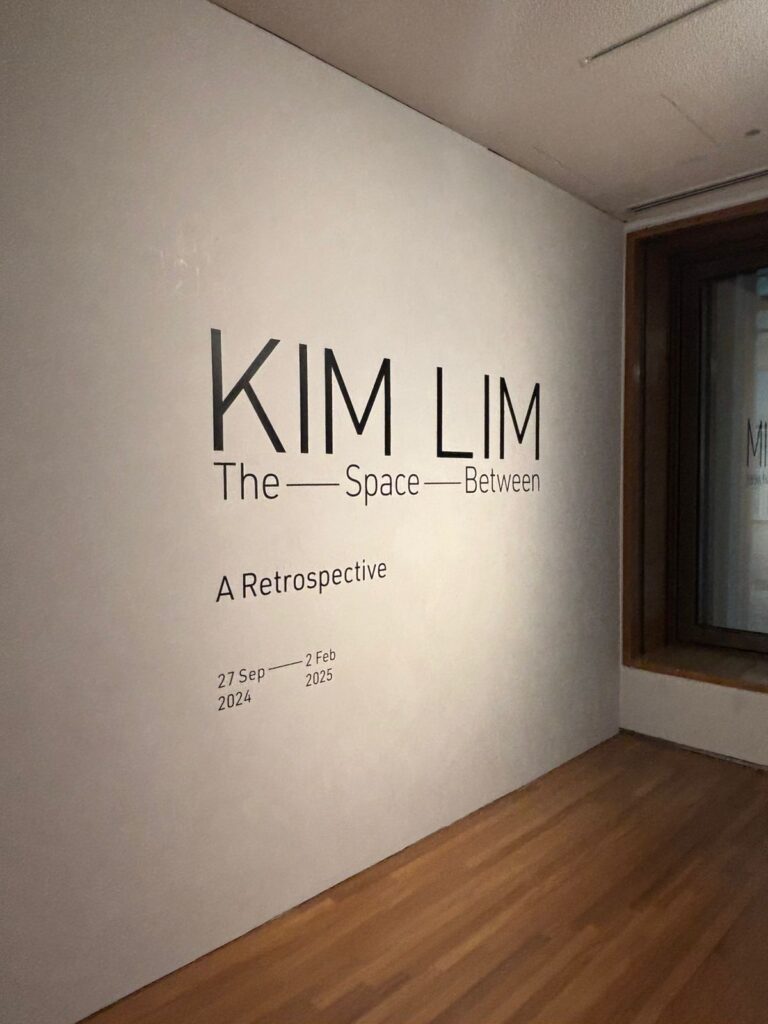
The Space Between — A Retrospective at National Gallery Singapore
At the National Gallery Singapore, Kim Lim: The Space Between offers a long-overdue and deeply resonant retrospective of Kim Lim (1936–1997), one of the most significant yet often understated figures in 20th-century sculpture. The exhibition traces Lim’s artistic journey across four decades, revealing a practice shaped by movement—between cultures, geographies, and philosophies.
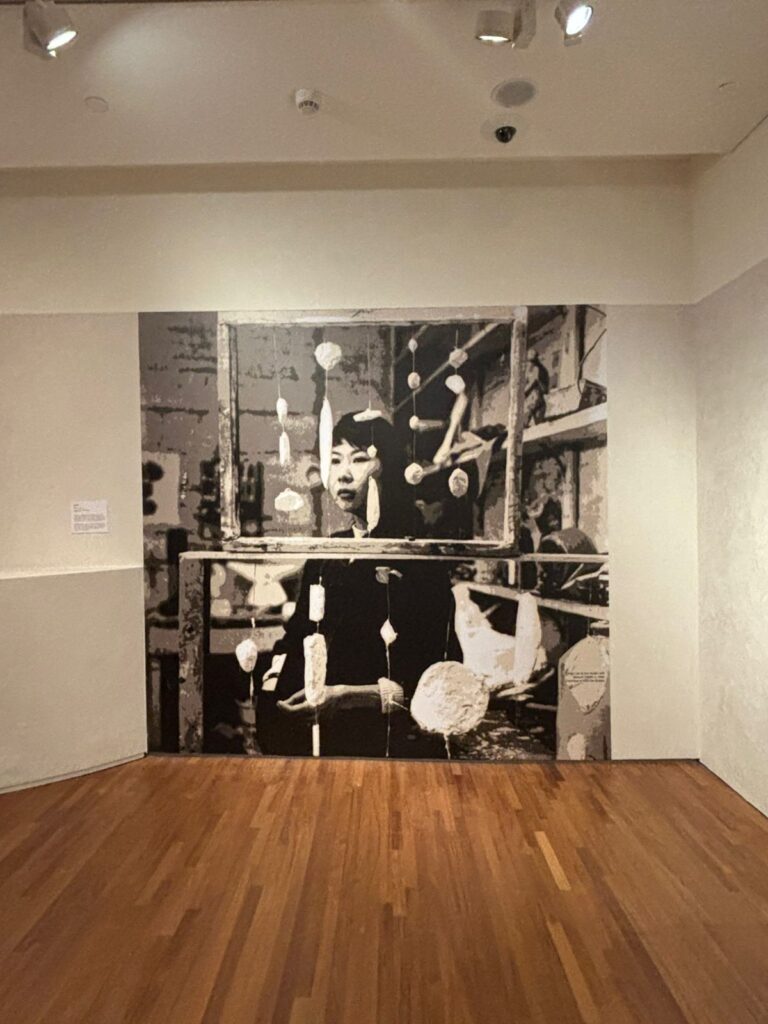
Born in Singapore and raised in Penang before settling in Britain, Kim Lim developed a sculptural language that resists easy categorisation. Her work navigates the space between East and West, abstraction and symbolism, restraint and sensuousness. Rather than aligning herself fully with Euro-American Minimalism, Lim drew inspiration from diverse sources, including Asian art, architecture, and calligraphy, forging a cosmopolitan and deeply personal visual vocabulary.
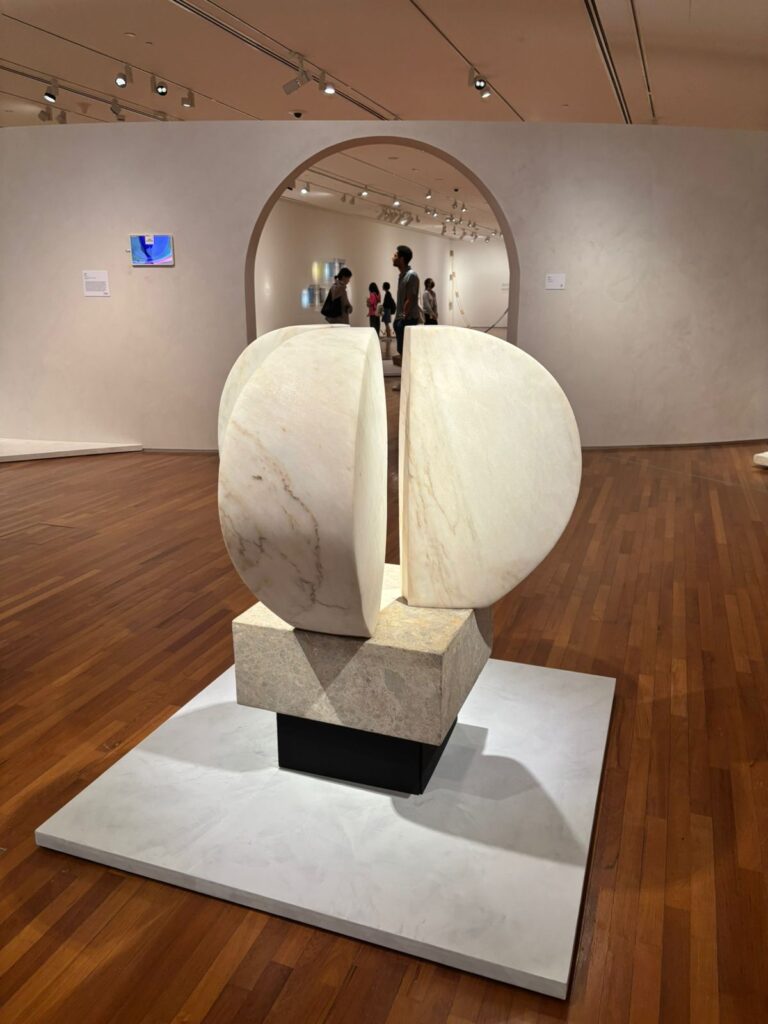
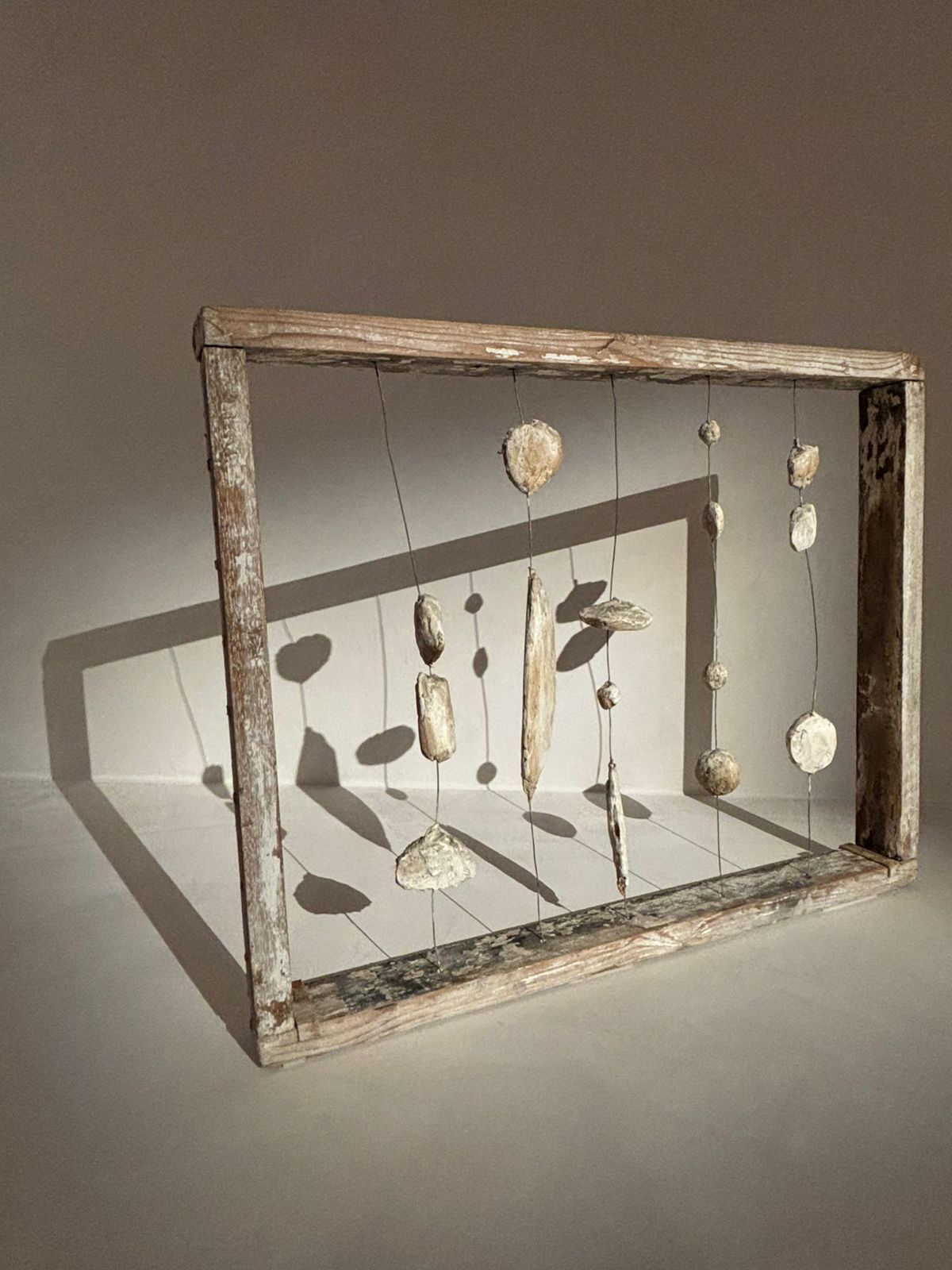
The exhibition brings together key sculptures, prints, archival materials, and rarely seen photographs, allowing viewers to witness the evolution of her thinking. Repetition, rhythm, and balance recur throughout her work, reflecting her interest in structure, meditation, and the physical experience of form in space. Materials such as stone, wood, and bronze are handled with quiet precision, inviting contemplation rather than spectacle.
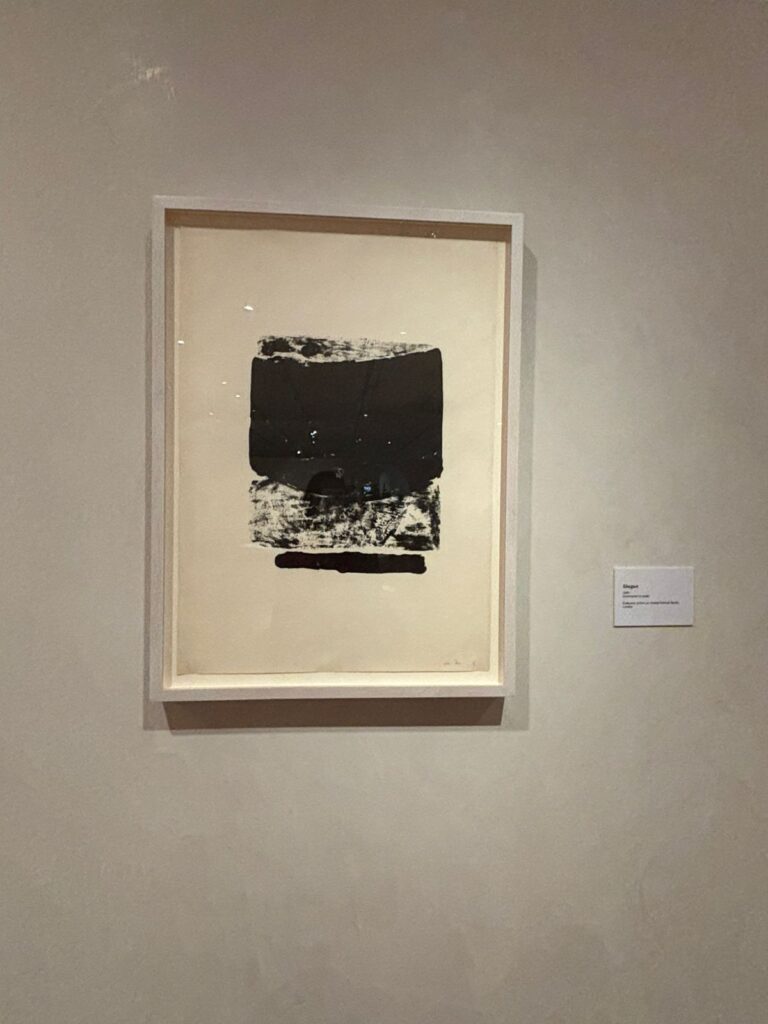
Crucially, The Space Between reframes Kim Lim not as a peripheral figure shaped by migration, but as an artist who consciously resisted cultural labels and orientalist readings of her work. Her sculptures exist in dialogue with place and time, yet remain insistently independent—rooted in intuition, travel, and sustained observation.
Presented within the Southeast Asian context of the National Gallery Singapore, the retrospective feels both timely and restorative. It not only reclaims Kim Lim’s rightful position within global modernism, but also opens new conversations about diaspora, abstraction, and the power of artistic in-between spaces.
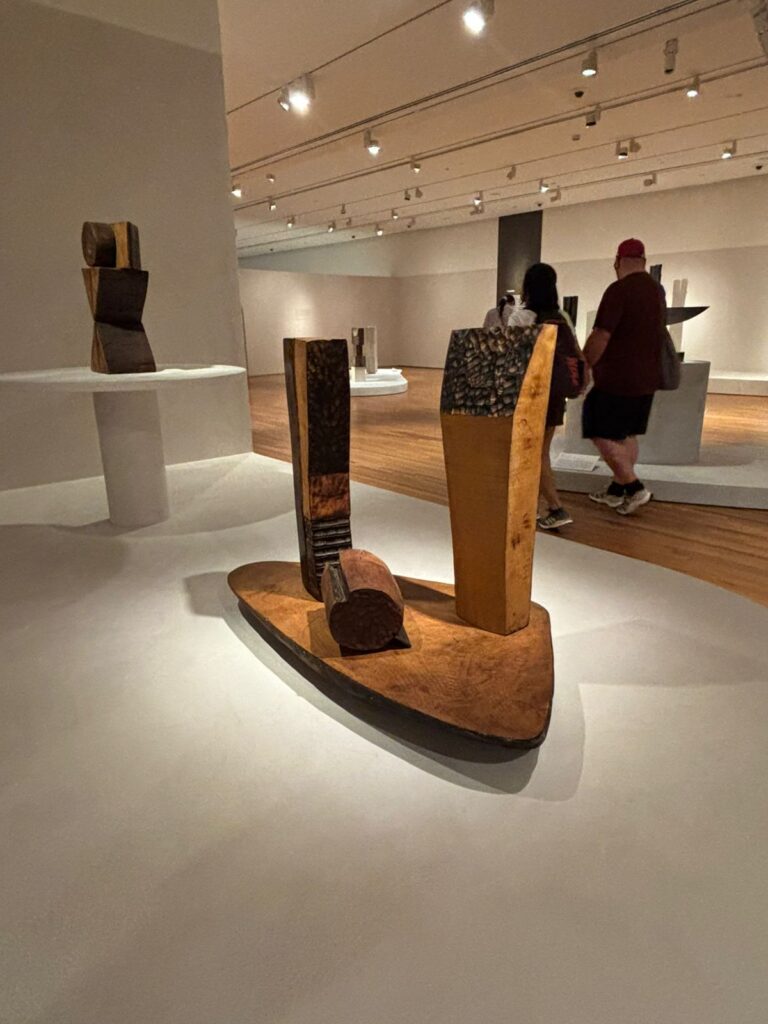
Kim Lim: The Space Between is less a conclusion than an invitation—to pause, to look closely, and to experience form as a quiet, enduring presence.