
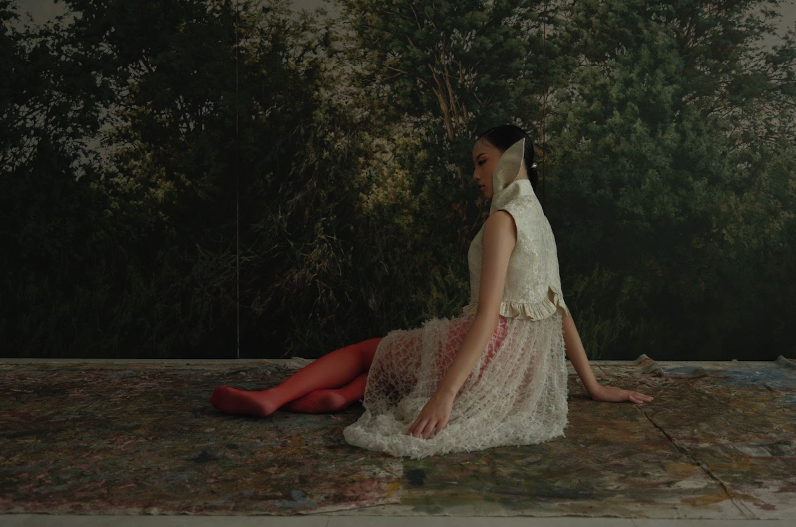
For Natalia Kiantoro, fashion has never been merely about clothing. It is a language—deeply personal, emotionally charged, and quietly powerful. Growing up in Surabaya, a city she describes as rational, academic, and business-minded, Kiantoro found herself craving a space to express emotions that words could not fully contain. In an environment with limited artistic exposure at the time, fashion became her first medium of self-expression a way to be heard without speaking.

From the very beginning, Kiantoro understood that fashion, for her, was not about trends or surface-level aesthetics. It was a vessel for memory, emotion, and identity. That philosophy continues to define her work today.
A Design Identity Shaped by Duality
Natalia Kiantoro’s design identity is rooted in dualism: softness and strength, emotion and architecture, femininity and structure. Strong silhouettes have always been a signature, but over time her work has evolved beyond visual impact alone. Today, every cut, detail, and construction choice is guided by intention—each element exists to convey a specific emotion or narrative.
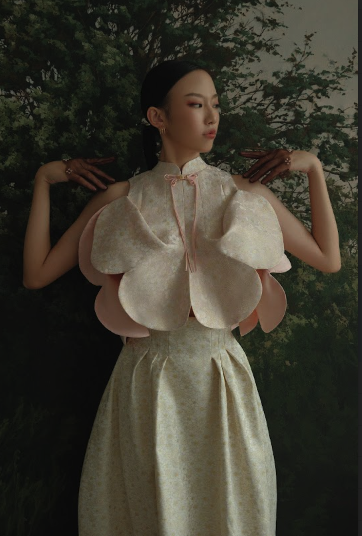
“What has changed is the depth,” she explains. “I’m more conscious now of why something exists and what it communicates.”
This evolution reflects a designer who has grown not only in skill, but in emotional awareness and narrative clarity.
Fashion as an Archive of Human Emotion
Kiantoro’s creative process often begins at moments of personal transition—loss, separation, maturation, or the quiet work of making peace with oneself. She is drawn to fragile, often unseen moments that shape who we become. For her, fashion functions as an archive of emotions, transformed into something tangible and wearable.
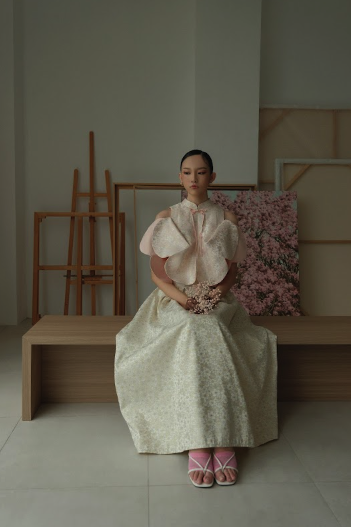
Her process starts with what she calls “emotional research”: writing, collecting memories, and immersing herself in art, architecture, and literature. From there, she builds mood boards, experiments through draping or illustration, and selects materials based on how they fall, move, and interact with the body. Texture, she believes, carries emotion just as powerfully as form.
The final stage is about balance, refining construction so that each piece remains functional without losing its conceptual soul.
Cultural Roots and Quiet Feminine Strength
As an Indonesian woman from Surabaya, Kiantoro’s cultural background deeply informs her visual language. She challenges the notion that femininity and elegance equate to weakness. Instead, her work embodies a form of strength that is calm, poised, and assured—where grace and power coexist.
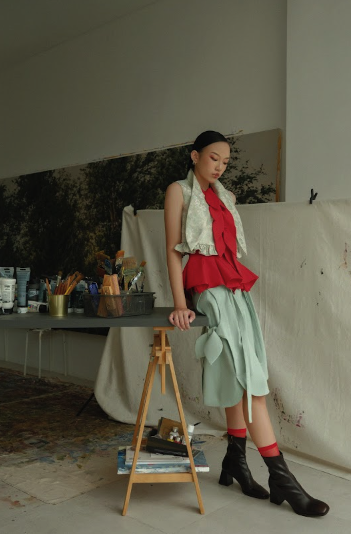
This perspective has recently found expression in her latest campaign, Oubaitori, inspired by a Japanese philosophy that celebrates growth without comparison. The concept reflects four spring flowers that bloom in their own time and way, each equally valid, none competing with the other.
“Oubaitori speaks about growing at your own pace,” Kiantoro explains. “Without pressure to resemble someone else.”
Designing for the Reflective Woman
When designing, Natalia’s envisions a woman who is introspective and emotionally aware, someone who does not feel compelled to explain herself. She is strong without being aggressive, soft without losing her edge. She is comfortable in silence, yet commands presence.
This philosophy extends to the community around her brand, including her loyal audience known as NKLadies. Designing for them, she says, feels intimate and therapeutic—especially in the earliest stages of creation, before external expectations or market pressures intervene.
Integrity in a Fast-Moving Industry
One of Natalia’s greatest challenges has been maintaining her identity in an industry that often prioritizes what is easily and quickly sellable. Rather than compromising her vision, she chose to embrace limitations and turn them into strengths.
“Remaining myself matters more than becoming what is expected of me,” she says.
In an industry driven by speed, Natalia chooses depth. She believes relevance does not come from chasing trends, but from honesty and consistency. By allowing her work to grow organically, she trusts that sincerity will always find its audience.
Oubaitori: A Quiet Manifesto
The Oubaitori campaign stands as one of Natalia’s most personal and contemplative works to date. Visually, it is expressed through structured yet non-restrictive silhouettes, soft color palettes, and layered textures that mirror emotional growth and maturity. Nothing is excessive; every detail exists with intention, creating space for the wearer to breathe and simply be.
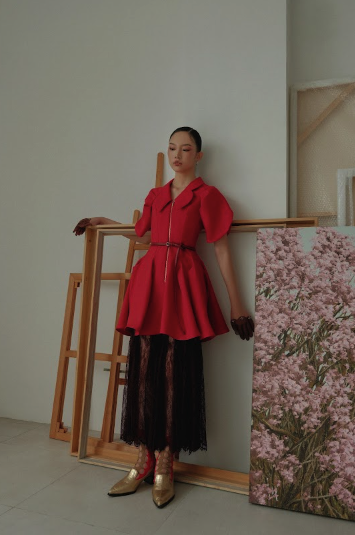
At its core, Oubaitori carries a simple but profound message: becoming yourself is more important than becoming comparable.
A Lasting Legacy
Looking ahead, Natalia Kiantoro hopes to continue exploring the relationship between emotion, body, and structure, positioning fashion as a space for contemplation rather than consumption. The legacy she seeks to leave behind is not just a collection of garments, but a way of thinking: that fashion can be a medium for self-reflection, emotional honesty, and quiet empowerment.
In a world that constantly urges comparison and speed, Natalia’s work stands as a gentle yet firm reminder that growth, when authentic, does not need an audience it only needs truth
