

In recent years, folk music in Indonesia has started to make its voice heard again. Many people say that this music is minimalist with lilting tones which are very suitable to be enjoyed while drinking a cup of coffee and accompanied by the beautiful twilight in the afternoon. However, if we look back a little, this music itself is not synonymous with minimalist music.
In English, the definition of folk is people or nation. If we connect this definition with music that is called folk, it is the keyword that becomes the identical benchmark for this genre of music. Quoting from Rachel Clare Donaldson’s writing titled Music for the People: The Folk Music Revival and American Identity, 1930–1970, this music has its strength in its lyrics.
In Indonesia itself, folk music has a fairly long and strong history in its development. Compared to other popular music genres such as pop, blues, or jazz, this music has its fans. The popularity of this music in Indonesia began with Ananda Sukarlan, who was born in 1968, where his most celebrated work is a series of virtuosic Rapsodia Nusantara for piano solos, with musical patterns based on Indonesian folk tunes.
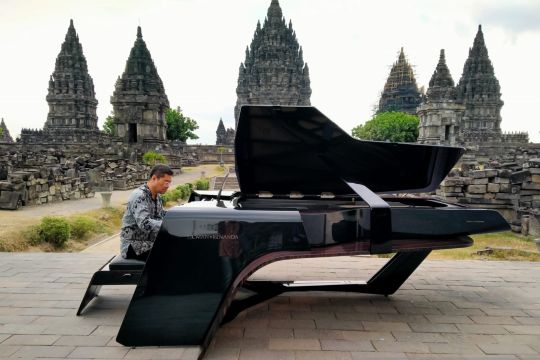
Ananda Sukarlan first learned about the piano at the age of five through his older sister, Martani Widjayanti. At the Koninklijk Conservatorium Den Haag, he deepened his knowledge of playing the piano. He was able to graduate summa cum laude in 1993 under the guidance of Naum Grubert, an accomplished pianist who often won international titles.
From here his name became known to the world. He began to diligently appear in festivals abroad accompanying famous symphony orchestras and ensembles in several large European cities such as Berlin, Rotterdam, Paris, Wellington, and almost all symphony orchestras in Spain. Ananda, who often takes part in Europe, also frequently participates in Indonesian official events.
Rapsodia Nusantara is one of Ananda’s famous works which is developed from traditional Indonesian songs, and he has been working on Rapsodia Nusantara since 2006 until now. This man who currently lives in Spain said that his Rapsodia Nusantara journey has taught him lessons about Indonesian culture and history that he previously did not know. He made the Rapsodia up to number 38, representing every province in Indonesia. Special for number 39, he said this song was specifically made for people with disabilities.
In making compositions, he uses a classical tradition approach such as that of Mozart and Beethoven, where the music played is more romantic. But, even though he plays instruments in a Western-style, he, who is listed as the first Indonesian pianist in The International Who’s Who in Music Book, said that Indonesian music still has differences from Western music. Completing a regional music composition tied with a classical soul, perhaps only this genius musician can interpret it.

